A kayak can move quietly across a lake with surprisingly little effort. A few well-timed strokes keep the boat gliding, and steering feels almost instinctive once the basic movements become familiar. Turn into a strong headwind, however, and the experience changes. Maintaining direction takes concentration, while inefficient strokes quickly become exhausting.
That contrast explains much of kayaking’s appeal. It can be a relaxed outdoor activity or a physically demanding sport, depending on the water and the route. A beginner exploring a sheltered lake faces different challenges from a paddler navigating coastal currents or technical rapids.
Getting started involves more than choosing a boat. Understanding paddle technique, learning how to maintain balance, and recognizing changing water conditions all contribute to a safer, more enjoyable experience.
Getting Started With Kayaking
Kayaking involves traveling through water in a small craft using a double-bladed paddle. Unlike canoeing, where a single-bladed paddle is commonly used, kayaking allows strokes on alternating sides without switching the paddle between hands.
For most newcomers, recreational kayaking offers a practical introduction. Recreational kayaks generally have stable hulls, comfortable seating, and straightforward handling. They work particularly well on sheltered lakes and gentle waterways.
The first outing should take place somewhere predictable. A calm lake or protected bay with easy shoreline access provides room to practice without dealing with strong currents or persistent waves.
An introductory lesson is worthwhile. A qualified instructor can demonstrate how to enter and exit the kayak, adjust the seating position, perform basic strokes, and respond to a capsize. Learning wet exits and assisted recovery under supervision is considerably safer than experimenting alone.
Kayaking for beginners does not demand exceptional fitness. Coordination and consistent practice matter more initially. Swimming ability is strongly recommended, although even confident swimmers need a properly fitted life jacket.
Choosing a Kayak for Where You Want to Paddle
Kayak design influences stability, speed, maneuverability, and suitability for different environments. A boat that handles comfortably on a small lake may perform poorly on exposed coastal water or a technical river.
Two common designs are sit-inside and sit-on-top kayaks. Sit-inside models position the paddler within a cockpit, offering some protection from wind and spray. Sit-on-top kayaks have open decks, making boarding and remounting relatively straightforward.
Hull dimensions also affect performance. Longer kayaks generally track more efficiently, while shorter models turn more readily. Wider hulls often feel steadier when upright, although overall stability depends heavily on hull shape.
Lakes and Calm Water
Sheltered lakes are well suited to recreational kayaking. Without strong currents, beginners can concentrate on maintaining direction, turning, and developing an efficient paddling rhythm.
Recreational kayaks measuring approximately 9 to 12 feet are common choices for short outings. Their designs typically favor initial stability and manageable handling rather than maximum speed.
Sit-on-top models are convenient in warm weather. Many include scupper holes that drain water from the deck. Sit-inside kayaks may provide a drier ride in cooler conditions, although an open cockpit can collect water following a capsize.
Wind remains a consideration even on familiar lakes. Long stretches of exposed water allow waves to build, making a return journey considerably harder. Beginners should choose routes with accessible landing points and check the forecast before launching.
Rivers and Moving Water
River kayaking introduces moving currents, obstacles, and situations where reaching shore may be difficult.
Recreational kayaks can be suitable for gentle, unobstructed rivers. Faster water requires greater maneuverability and specific skills.
Whitewater kayaking uses shorter boats designed for rapid directional changes. Paddlers must learn to identify eddies, hydraulics, and other river features while developing appropriate rescue skills.
The International Scale of River Difficulty classifies river sections from Class I to Class VI. Class I generally involves easy-moving water with limited obstacles. Higher classes indicate increasingly demanding maneuvers and hazards. Class VI represents extreme conditions that may be exceptionally dangerous or effectively unrunnable.
Water levels can change the difficulty of a river substantially. Heavy rainfall upstream may strengthen currents or conceal obstacles. Fallen trees, submerged branches, and low-head dams are particularly hazardous.
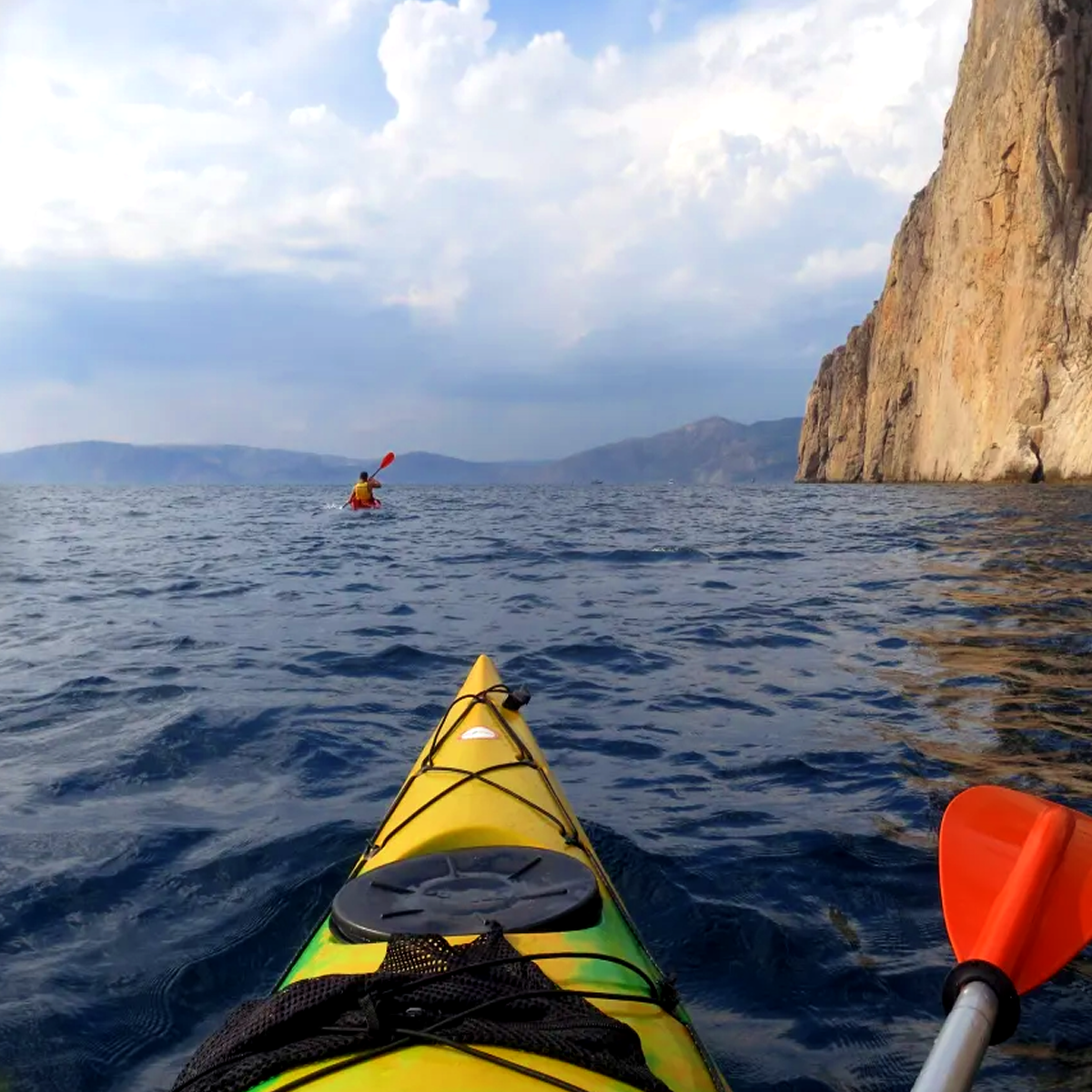
Sea kayaking presents different demands. Coastal touring kayaks are generally longer and designed for efficient travel over distance. Their paddlers must understand tides, swell, currents, and available landing locations.
Choosing a kayak therefore begins with identifying where it will be used, not simply comparing prices or advertised performance.
The Fundamentals of Paddling
Effective kayaking techniques depend on coordinated body movement rather than arm strength alone. Efficient strokes use torso rotation and pressure through the legs to transfer force into the paddle.
Start with the seating position. The back should remain upright, with relaxed shoulders and slightly bent knees. Footrests provide support during strokes and help maintain control.
Choosing the correct kayak paddle is equally important. Length depends on kayak width, paddler height, and stroke style. Recreational paddlers commonly use longer paddles than whitewater kayakers, who favor compact equipment for quick movements.
A relaxed grip helps reduce strain. Holding the shaft too tightly can fatigue the hands and forearms unnecessarily.
Forward Stroke, Turning and Stopping
The forward stroke provides the foundation for most paddling technique.
Place the blade fully into the water near the feet. Rotate the torso as the stroke develops, using pressure against the footrest to help transfer power. The blade should normally leave the water around hip level.
Keeping the blade relatively close to the kayak during the power phase helps maintain a straighter course and reduces wasted effort.
Turning requires a sweep stroke. Moving the blade through a broad arc away from the hull creates rotational force. A forward sweep on the right generally turns the bow left, while the opposite movement turns it right.
Reverse strokes help slow or stop the kayak. The blade moves forward through the water against the boat’s direction of travel. Alternating controlled reverse strokes on both sides reduces speed without causing a sharp turn.
Beginners should practice these movements separately before combining them into short exercises between visible landmarks.
Balance and Boat Control
Balance in a kayak differs from balance on land. The hull moves beneath the paddler, and small changes in body position affect how it sits in the water.
An upright posture allows the hips to respond naturally to gentle movement. Stiffening the upper body or leaning excessively backward makes corrections harder.
Kayak stability has two important characteristics. Initial stability describes how steady the boat feels when upright. Secondary stability concerns how the hull behaves as it tilts farther onto one side.
Wide recreational kayaks often provide reassuring initial stability. Narrower touring models may feel less settled initially but can offer predictable support when edged, depending on their design.
Edging involves tilting the kayak through controlled hip and knee movements while keeping the upper body balanced. It can assist with turning and maneuvering. Beginners should learn this skill in sheltered conditions under appropriate supervision.
Building Strength and Endurance for Kayaking
Kayaking training should develop efficient movement before emphasizing speed or distance.
A good forward stroke recruits the back, abdominal muscles, shoulders, and legs. Distributing the workload reduces reliance on smaller arm muscles, which fatigue more quickly.
Short sessions with regular breaks are productive for beginners. As technique improves, paddlers can gradually increase continuous paddling time and introduce modest changes in pace.
Away from the water, rowing exercises, controlled trunk rotations, and shoulder stability work support useful movement patterns. Walking, cycling, and swimming can improve aerobic endurance.
The goal is to maintain consistent technique over longer periods while preserving enough energy to respond to unexpected conditions.
What to Bring on the Water
Kayaking equipment should match the environment, weather, and expected trip duration. A short lake outing requires less specialized gear than coastal travel, but essential safety items remain important.
A properly fitted personal flotation device is fundamental. In the United States, paddlers should use a life jacket appropriate for the activity and compliant with applicable regulations.
Clothing should be selected according to water temperature rather than air temperature alone. Cold-water immersion can cause involuntary gasping, rapid breathing, and impaired coordination. A wetsuit or drysuit may be necessary in colder conditions.
Useful kayaking gear includes:
- A suitable paddle: Correct dimensions improve comfort and stroke efficiency.
- A whistle: Provides a simple means of signaling for assistance.
- A bilge pump or bailer: Helps remove water from a sit-inside cockpit.
- A paddle float: Can assist certain self-rescue techniques with proper training.
- A waterproof communication device: Allows paddlers to contact assistance.
- A dry bag: Protects clothing, food, and personal belongings.
- Sun protection: Sunglasses, sunscreen, and headwear help limit exposure.
Specialized equipment depends on the environment. Whitewater paddlers generally need helmets and appropriate protective clothing. Coastal trips may require navigation tools, signaling equipment, and additional rescue gear.
A spray skirt can help prevent water entering a sit-inside cockpit, but paddlers must learn to release it and exit safely before using one.
Inspect the hull, paddle connections, footrests, and storage compartments before launching. Equipment problems are easier to address on shore than halfway through a trip.
From Your First Paddle to Longer Trips
Progress in kayaking is better measured through reliable boat control than distance alone.
An introductory outing might last 30 to 60 minutes, depending on conditions and instruction. Early practice should focus on entering and exiting safely, maintaining direction, turning, and stopping.
Once those movements become comfortable, short shoreline routes provide an opportunity to develop basic navigation skills. Recognizable landmarks help paddlers monitor their position and identify possible landing points.
Longer trips require more careful planning. Paddlers need to estimate sustainable travel speed, account for breaks, and consider how wind or current might affect the return journey.
On calm water, a recreational paddler might maintain approximately 2 to 3 miles per hour. Actual progress depends on technique, boat design, and environmental conditions. That figure is a rough reference rather than a guaranteed planning speed.
Group routes should suit the least experienced participant. Everyone should understand the intended route, communication arrangements, and what to do if someone needs assistance.
Longer outings also require sufficient drinking water, food, and appropriate clothing. Fatigue can affect concentration and decision-making well before a paddler becomes physically exhausted.
Kayaking is one of several water sports that can progress from casual outdoor recreation to technically demanding activity. Moving into exposed coastal areas, remote waterways, or difficult rapids requires additional training in navigation, rescue procedures, and environmental assessment.
Experience on a calm lake does not automatically prepare someone for strong tidal currents or fast-moving rivers.
Weather, Water Conditions and Kayaking Safety
Kayaking safety begins before launching. Checking forecasts, identifying local hazards, and selecting a realistic route are more reliable than trying to overcome deteriorating conditions through physical effort.
Wind can substantially affect progress. A headwind increases the effort needed to move forward, while an offshore wind can carry a paddler away from land. Exposed lakes and coastal waters may become challenging even when conditions near the launch point appear manageable.
Cold water presents another serious risk. Sudden immersion can trigger cold-water shock, followed by reduced coordination and muscular control. A life jacket provides flotation but does not prevent hypothermia or eliminate the need for thermal protection.
On rivers, rainfall upstream may raise water levels and increase current speed. Fallen trees and submerged branches can create strainers, allowing water through while trapping a person or kayak.
Coastal paddlers must also consider tides and currents, which may move independently of the wind. Changing tidal flow can affect travel speed and access to landing locations.
Other vessels present additional hazards. Kayaks sit low in the water and may be difficult for motorboats or commercial craft to see. Paddlers should remain visible and avoid busy navigation channels whenever practical.
Before departure, check relevant forecasts, identify possible exit points, and tell someone on land where the trip will take place and when to expect a return.
Capsize recovery should be practiced in controlled conditions. Wet exits and assisted rescues provide a foundation, while self-rescue methods require additional training.
Paddling with others can improve safety when participants understand communication and rescue procedures. However, several inexperienced paddlers traveling together are not automatically equipped to handle an emergency.
Knowing when to shorten or cancel a trip is an important skill. Conditions that exceed the group’s experience or equipment are a reason to return to shore.
FAQ
Is kayaking difficult for beginners?
Recreational kayaking is relatively accessible on calm, sheltered water. Many beginners can learn forward strokes and basic turns during an introductory lesson. Reliable boat control, capsize recovery, and judgment in changing conditions require more practice.
What is the difference between kayaking and canoeing?
Kayakers generally use a double-bladed paddle and sit with their legs extended forward. Canoeists commonly use a single-bladed paddle and may sit or kneel. Both activities include recreational and competitive disciplines.
Can someone go kayaking without knowing how to swim?
Swimming ability is strongly recommended. A properly fitted life jacket provides flotation but cannot eliminate the risks of cold water, panic, or separation from the kayak. Non-swimmers should seek professional instruction in controlled conditions rather than attempting independent outings.
What type of kayak is best for a beginner?
A stable recreational kayak is usually a practical starting point for sheltered lakes and gentle waterways. Sit-on-top models are convenient to board and remount, while sit-inside kayaks offer additional protection from spray.
How far can a beginner kayak in one day?
There is no universal distance. For some beginners, a total of 1 to 3 miles may be reasonable in calm, sheltered conditions. Others should start with shorter outings. Wind, current, fitness, and technique can significantly change the effort required.